Let me state the bottom line first: The company announced that its IPO has been postponed to a later date due to insufficient demand. I view this as a natural consequence of the recent influx of high-volume IPOs into the market. Although we have experienced periods with similar numerical intensity of IPOs in the past, we have rarely seen companies of this scale and volume on our exchange with such frequency.
Looking from a macroeconomic perspective, despite the volatility in commodities during the Fed’s rate-cutting cycle, the positive reflection of global market conditions on our stock exchange remained quite limited. Brent crude oil approaching the $90 level once again signals that the upward trend in global inflation could be persistent. Adding this potential surge in energy prices to our inflation, which has remained at high levels for the past two years, poses a risk of creating additional downside pressure.
In such an environment, I believe investors need to be much more selective when it comes to IPOs. On the broader market side, I expect the period requiring detailed analysis to continue for mid-term position holders and active traders, while gradual buying opportunities may arise for accumulating investors.
Given that the scope of topics specific to Bewen Enerji is relatively limited, I felt the need to make an introduction covering general market conditions. In this review, rather than repeating standard IPO details, I focus directly on the company’s structure, financials, debt position, and valuation.
IPO Structure and Shareholder Sale
I find the company’s proposed free float of 25.24% to be highly reasonable and well-balanced. Out of the total offering size of TRY 3.8 billion, 70% consists of a capital increase, while the remaining 30% stems from a secondary share sale by existing partners.
Individual partners selling shares might raise a question mark at first glance. However, even though the proceeds from the shareholder sale do not go directly into the company treasury, the fact that they will be used for price stabilization across all 24 million shares over a 30-day period stands out as a positive detail.
Following the IPO, the ownership structure is shaped as follows:
- Elawan Energy S.L.U.: 37.37%
- Beyçelik Holding A.Ş.: 37.37%
- Free Float: 25.24%
The fact that the two main corporate partners will continue to manage the company with equal ownership stakes is a net positive in terms of corporate continuity.
Use of Proceeds and Debt Structure
Net IPO proceeds are allocated with 55% designated for growth investments and 45% for debt repayment. I maintain a neutral stance on the debt repayment ratio for now; its true implications will become clearer based on the overall balance sheet debt structure.
Looking at current assets, we see a total of approximately TRY 638 million, comprising TRY 190 million in cash, TRY 320 million in financial investments, and TRY 67 million in trade receivables. With trade payables remaining at TRY 42 million, the company maintains its net trade creditor position.
On the other side of current assets, short-term liabilities stand at TRY 676 million. As long as the company maintains profitability, it appears strong enough to manage this short-term debt structure. The cash influx from the IPO will ease short-term liabilities and bolster its long-term debt burden of TRY 2.3 billion. Meanwhile, the company’s non-current assets stand at TRY 18.3 billion.
Operational Structure and Income Statement
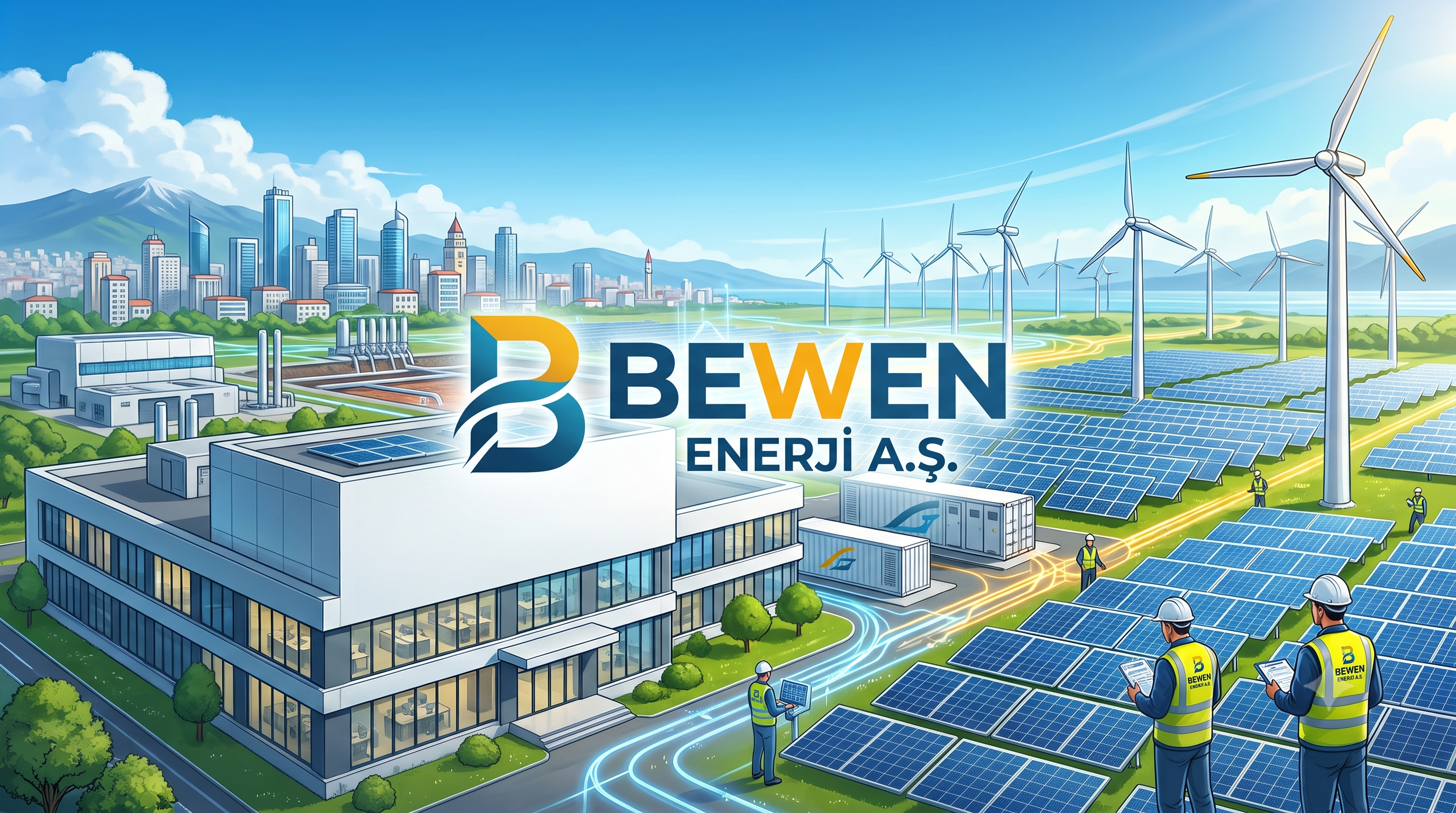
Operating in the renewable energy sector, Bewen Enerji holds both Wind Power Plants (WPP) and Solar Power Plants (SPP) in its portfolio. The company’s current installed capacity is 137.5 MWe.
Looking at financial results, revenue has trended slightly downward over the past three years, falling to TRY 1.579 billion. However, in the Q1 2026 (2026/3) income statement, we can see early signs of a bottoming-out signal, mirroring the broader trend observed across the sector.
The company’s historical margin performance is summarized below:
| Margin Type | March 31, 2026 (3 Months) | 2025 (Full Year) | 2024 (Full Year) | 2023 (Full Year) |
| Gross Margin | 43.95% | 36.35% | 52.14% | 62.57% |
| EBITDA Margin | 71.95% | 72.48% | 72.35% | 73.88% |
| Net Margin | 31.30% | 43.59% | 58.88% | 146.83% |
Yearly cost increases in an inflationary environment, combined with revenue failing to remain even flat, have exerted pressure on gross margins. Despite maintaining a high EBITDA margin above 70%, the main driver behind the decline in net profit margin is the impact of financial expenses and net monetary position items.
Excluding the net monetary position effect, the company’s profitability trend is as follows:
- 2023: TRY 255 million profit
- 2024: TRY 129 million loss
- 2025: TRY 217 million loss
If the funds raised from the IPO reduce financial expenses and cash flow is supported by interest income, I expect net profitability to be positively impacted. If the recovery seen in the 2026/3 results continues, a gradual strengthening in profitability trends is likely.
Capacity, Valuation, and Peer Comparison
Prior to the postponement decision, the company was set to go public at a market valuation of TRY 15.254 billion. With planned investments, the target is to expand installed capacity to 233 MWe in the upcoming period. However, considering the company’s cash generation and profitability metrics, it appears to struggle to generate sufficient cash in its current structure despite holding TRY 18.3 billion in non-current assets. This reinforces the impression that the valuation was set too high.
A comparison with GalataWind, an industry peer, makes the picture clearer:
- GalataWind boasts an installed capacity of 357 MWe, 100% renewable.
- The company’s current assets stand at TRY 1.991 billion, short-term debt at TRY 842 million, long-term debt at TRY 2.489 billion, and non-current assets at TRY 19.5 billion.
- The company’s full-year 2025 revenue came in at TRY 3.234 billion.
Considering GalataWind’s revenue generation, cash flow, and overall capacity, I believe the valuation figures put forward for Bewen Enerji—even if achievable in theoretical models like discounted cash flow (DCF) or market multiples analysis—do not fully align with current market realities.
Overall Assessment
Bewen Enerji possesses several positive attributes, including the presence of two strong corporate partners, a well-balanced free float of 25.24%, a high EBITDA margin above 70%, and the commitment to utilize all proceeds from the shareholder sale for price stabilization.
However, the company’s cash generation capacity, the pressure of financial expenses on net profit, and its elevated valuation compared to industry peers stand out as risk factors that need close monitoring. In my view, both valuation multiples and market conditions should be re-evaluated during the company’s postponed IPO process.
LEGAL DISCLAIMER: This content does not constitute investment advisory services. Investment advisory is a personalized service provided based on an individual’s risk-return profile, financial standing, and investment objectives. The information, commentary, and assessments provided herein are prepared solely for general informational purposes and should not be construed as investment recommendations or guidance. This content may not align with the reader’s financial position or risk-return preferences; therefore, investing based solely on this information may not yield the expected outcomes.