# IPO Analysis
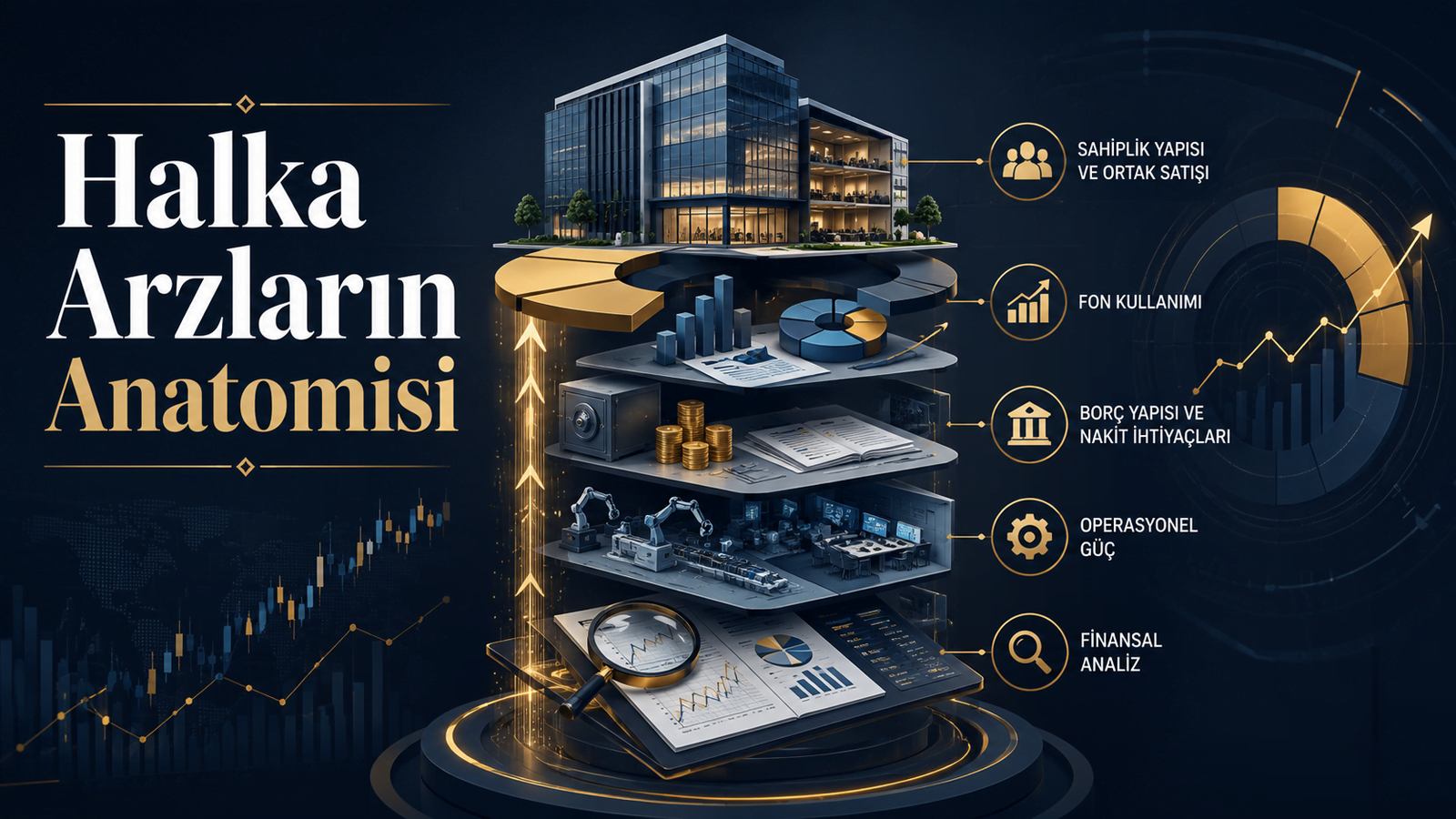
Instead of rehashing basic information that can be easily found anywhere—such as the IPO date, offering price, or participating banks—this post will analyze the company’s IPO structure, the logic behind shareholder sales, fund utilization plans, debt status, operational strength, and growth potential from an investor’s perspective. My goal is to skip the routine data and share the details I find critical in the company’s financial structure along with my personal assessments.
## IPO Structure and Shareholder Sales
Looking at the shares the company will issue during the IPO process, **60%** consists of a capital increase, while the remaining portion is a secondary offering by the sole individual shareholder, Yunus Emre Alimoğlu. At first glance, a sale by an individual shareholder might be viewed negatively for the company. However, the real factor to focus on here is the presence of other shareholders and the strategy they are pursuing.
The company’s other shareholder is *Alyors Sağlık ve Gıda Teknolojileri Sanayi Ticaret Anonim Şirketi*. Since individual shareholders stand alone, they may want to use the cash from such sales for personal investments; however, it’s a different story for corporate entities, which aim for holistic growth. In this regard, the fact that the corporate partner, Alyors, is not selling any shares at all left a highly positive impression on me.
The free float ratio remaining at a reasonable level of **15.51%** and the corporate shareholder holding onto its shares suggest that while the company is using the IPO to clear a short-term debt bottleneck, it remains confident in its growth and value-creation potential. Because of this outlook, I’m giving the company a plus point. The lock-up commitments regarding shareholder sales have also cleared up potential question marks. Additionally, I view the buy order of **2,625,000 lots**, to be executed over 5 days, as another positive element supporting the market.
When examining the trade receivables from related parties, it is clear that these receivables will be collected from the shareholders. Since the shareholder will transfer all proceeds from the IPO back into the company, they will both settle their own debt and inject **3.6 billion TL** of fresh cash into the company’s coffers. Allocating a **3%** share to company employees was another positive development I appreciate. It’s also worth noting the company’s employment data for future analysis: the company currently has **1,016** employees, up from 686 at the end of 2023, 783 at the end of 2024, and 968 at the end of 2025.
## Fund Utilization and Cash Requirements
Looking at how the IPO proceeds will be used, I can say the funds are split roughly **50% for investment** and **50% for debt repayment**. Although working capital requirements are technically not a direct liability, I prefer to group them under debt due to their function. If a firm needs this much cash just to meet its working capital needs, it means they have, in a sense, borrowed against their own future in previous years. On the allocation groups side, a well-balanced distribution structure seems to have been preferred.
## Operational Structure and Growth Potential
When analyzing the company’s operational framework, it becomes apparent that it does not engage in direct production itself; rather, it acts as an umbrella company for subsidiaries like *Orzaks*. This setup can essentially be described as a simple holding structure. The company generates the vast majority of its sales in the domestic market. The gradual aging of the country’s population, combined with the drop in the average consumption age for supplements down to the 30s, indicates that the sector will generate higher real demand over the medium to long term.
Furthermore, the company is the clear market leader in its sector, commanding a **25%** market share. Looking at their ongoing R&D efforts, they have built a robust infrastructure capable of fundamentally supporting growth. Consequently, I anticipate that they will maintain their market share and quickly adapt to emerging market conditions, thanks to their deep-rooted experience.
## Debt, Receivables, and Cash Cycle
While the firm’s heavy debt burden might look alarming at first glance, I can say that the borrowing has been structured in a highly strategic and manageable way. The fact that the debt is entirely fixed-rate means they won’t be able to capitalize on potential future interest rate cuts. Though this seems like a disadvantage, its impact is limited, and for me, it actually serves as a facilitating factor that enhances predictability during valuation. Under normal circumstances, I wouldn’t dissect such deep debt structures for other firms, but since debt is the most critical line item for this company, diving into the details is necessary.
The company’s short-term debt—meaning liabilities due within a year—stands roughly around **3.5 billion TL**. The question *“How will this amount be paid?”* naturally comes to mind; however, looking closer at the details, the portion due within 0-3 months is only **860 million TL**. This amount can be easily covered even with the current cash on hand. The remaining 3-12 month debt, which sits at **2.580 billion TL**, won’t strain the company’s cash flow either and can comfortably be cleared using the fresh capital coming from the IPO. Thanks to the sound financing structure established for upcoming investments, I project that the company’s debt management will not pose any risk until 2029.
Reducing the collection period for trade receivables down to **38 days** is a genuinely remarkable achievement in an era where cash management is vital. Conversely, the day payable outstanding for trade payables stands at **62 days**. While widening this gap might carry risks for smaller players, for large-scale companies of this size, it is not risky and provides added value in terms of cash flow and interest income. Another noticeable detail in this section is the high volume of trade receivables. However, a deeper look reveals that this is no cause for concern either, as **60%** of these receivables are secured by commercial notes.
## Capacity, Investments, and the Outlook Ahead
It is stated that with current investments coming online, the company has a production capacity of **36 million boxes**. In a statement by the company’s CEO, it was noted that they are currently operating at full capacity. This statement may hold true if it specifically refers to the period from 2026 to the present day; however, looking at previous years, we see that the capacity utilization rate hovered around **85%**, which still points to a very high level of performance.
With the returns on new investments and the contribution of the new **36-million-box** factory in Kazakhstan (set to become operational gradually starting in 2028), the company’s growth momentum will accelerate even further after 2029. As for the financing of the Kazakhstan investment, it will be backed by 10% equity, 20% IPO proceeds, and 70% loans secured from international financial institutions. All arrangements for the loans are complete, and a commitment has been made to finish the factory **within 30 months**.
## Overall Assessment
When mapping out an overall projection and taking into account the gross profit margin of around **65%** and the net profit margin of roughly **15%**, I can confidently say that a highly high-quality company in terms of its fundamentals is entering Borsa Istanbul. Although the individual shareholder’s stock sale and the debt level initially stand out as risk factors to watch, the corporate partner’s refusal to sell shares, the low free float ratio, strong market share, and planned international investments effectively balance out the picture.
## Additional Points to Consider
- Since the company does not engage in direct production and functions more as an umbrella entity, it is necessary to separately examine the financials of *Alyors* and particularly *Orzaks*. Once I dive deeper into the financial statements of these subsidiaries, my general notes and evaluations regarding the company may be revised.
LEGAL DISCLAIMER: This content does not constitute investment advisory services. Investment advisory is a personalized service tailored to an individual’s risk-return profile, financial situation, and investment goals. The information, comments, and evaluations contained herein are prepared solely for general informational purposes and do not in any way constitute guidance for investment decisions. This content may not be suitable for the reader’s financial structure and risk-return preferences; therefore, investing based solely on this information may not yield the expected results.