# Ekim Turizm IPO Analysis
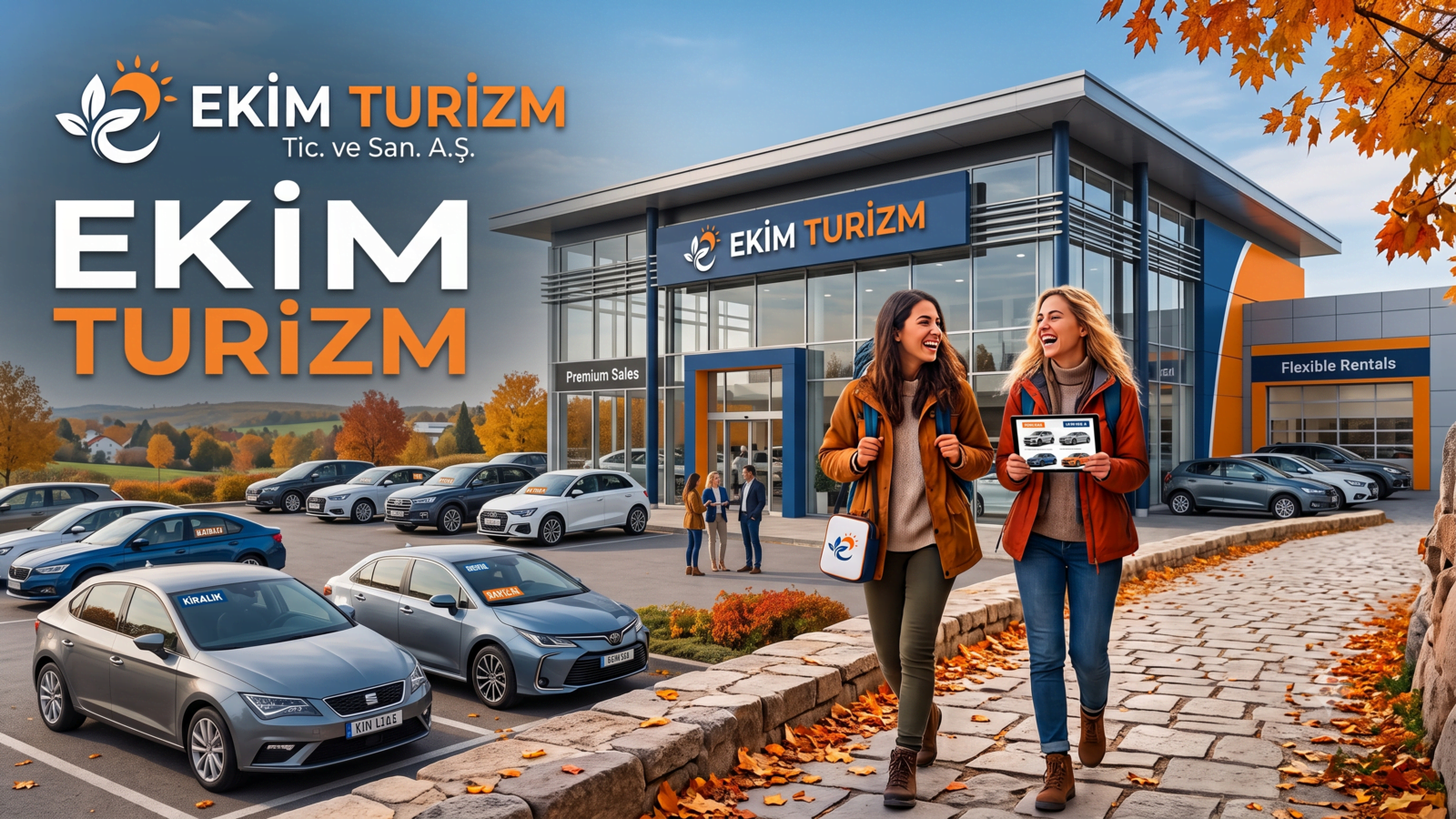
When analyzing Ekim Turizm’s IPO process, taking a proper investor approach means focusing on the company’s financial structure, operational strength, debt levels, and use of proceeds, rather than the basic details available everywhere. With a market share of roughly 10%, the company stands as the second-largest player in the industry. In this review, we will delve into its current risks and growth potential based on my notes.
## IPO Structure and Secondary Shares
A large portion of the IPO is being carried out through a capital increase. The secondary share sale ratio remaining at 18.5% is quite reasonable from an investor’s perspective. The fact that only a single partner is selling shares and that this sale is kept limited is a positive indicator for management stability. A free float rate of 19.47% also points to a very balanced structure.
Although Ak Yatırım has been authorized for price stabilization, the prospectus states there is no guarantee these transactions will definitely take place. We are used to companies setting this period to the upper limit of 30 days, but Ekim Turizm has limited it to 15 days. While 30 days seems more attractive from a retail investor’s perspective, letting the stock adjust to its own market dynamics after 15 days of support seems reasonable to me, provided there is no manipulative activity. The IPO is planned to generate a net cash inflow of 3.85 billion TL into the company’s coffers.
## Use of Proceeds and Cash Requirements
The allocation of these incoming funds is quite remarkable for understanding the company’s future strategy:
* **New Vehicle Acquisition (65% - 70%):** The largest share of the IPO proceeds is allocated to purchasing new land vehicles for operational leasing. Through these investments, the company aims to increase its market share by expanding and modernizing its fleet. Some recent board projections suggest this ratio could even be applied at 100% directly for new vehicle purchases.
* **Repayment of Bank Loans (25%):** Approximately a quarter of the proceeds will be used to pay down existing bank loans. This move aims to reduce financing expenses and build a more resilient financial structure.
* **Working Capital Requirements (10%):** The remaining portion will be transferred to working capital to sustain daily operations and support operational efficiency.
Considering the short-term debt obligations, I believe the use of proceeds is quite well-balanced. My personal preference would have been a 50/50 split between growth and debt repayment to pave a more defensive growth path. If short-term debt had been reduced more aggressively, financing expenses would have dropped, resulting in higher year-end net income. However, given the company’s appetite for growth, turning this period of shrinking demand—driven by FX advantages and selling pressure in the vehicle market—into a pricing advantage left a positive strategic impression on me. Of course, I am assuming this strategy relies on the expectation that interest rates will fall and the economy will exit its tightening cycle.
## Operational Structure and Growth
While the company has some niche diversification in its leasing activities, such as yacht chartering, the vast majority is vehicle leasing. Looking at the maturity breakdown of the leases from largest to smallest, we see the following breakdown: 70% between 24-36 months, 20% over 1 year, 10% over 36 months, and 0.92% under 1 year. The fact that the portfolio is predominantly corporate and long-term significantly reduces operational risk. If economic activity revives, the reflection of this structure on the company will be highly positive. Through these predictable leasing operations, the company manages to generate a net revenue of €657 per vehicle per month.
Examining the revenue breakdown, 40% of 2025 revenues came from leasing activities, while 58% came from vehicle sales. Looking back at previous years, in 2023, rental revenues stood at 30% and vehicle sales at 67%; in 2024, rental revenues were 35% and vehicle sales were 62%. Although the recent contraction in demand within the second-hand and vehicle sales market puts pressure on the firm, the leasing operations—which offer sustainable cash flow—continue to create value.
## Indebtedness, Receivables, and Cash Cycle
I remember that Borlease Otomotiv, which operates in a similar sector, owed money to 21 different banks during its IPO period and struggled due to high leverage. This precedent makes me approach Ekim Turizm, which operates in the same industry, with caution. The company’s debt structure carries a very large volume. Even though debt has been brought down over the years, its current cash assets remain weak compared to total debt.
On the balance sheet side, a vast majority of current assets consist of cash equivalents and trade receivables. It is stated that trade receivables and payables are collected and settled within an average of 30 days. While this collection/payment period seems a bit long for the company’s business model, it can be considered reasonable given today’s tight monetary policy environment.
The only positive aspect I see in the debt structure is that management structured the borrowings as long-term in previous years. Thanks to this, the company did not have to *throw in the towel* in 2023 like some negative examples in the sector, gaining a 3-year window of sustainability. The company’s total liabilities stand at around 18 billion TL and are predominantly long-term. However, the core element currently causing a liquidity squeeze is that 7.2 billion TL of these long-term debts matures and must be paid within this year.
The company has a strong cash and receivables balance; in contrast, its trade payables are only at 285 million TL. From a sustainability standpoint, however, a working capital deficit of 3 billion TL stands out. When revenue items are analyzed, covering this deficit through operational activities doesn’t seem to pose a problem. Even though a net monetary position gain is recognized due to indebtedness, I exclude this item when performing a rational valuation. For now, the company possesses enough liquidity to keep things running, though it’s not entirely comfortable. Because things could turn around with the slightest fluctuation in the economic landscape, these risks need to be analyzed thoroughly. Due to it being a service-oriented sector, sensitivity to macroeconomic shocks is high, but I do not expect an extreme shockwave anytime soon.
## Capacity, Investments, and Future Outlook
Under non-current assets, vehicles used for operational leasing make up almost the entirety of this section. However, this figure has declined from around 42 billion TL in previous years to 32.7 billion TL today. Since this contraction is a negative signal, it is necessary to examine the underlying reasons:
* High financing costs and rising loan interest rates have pushed up the borrowing costs for new vehicle investments.
* The sharp increase in the prices of brand-new vehicles has boosted procurement costs.
* Macroeconomic fluctuations have guided the company toward cautious risk management rather than aggressive growth.
* The company focused on fleet efficiency and preserving profitability rather than volume-based growth driven by unit counts.
Due to these factors, the company’s vehicle fleet, which stood at 21,203 units in 2023, has currently dropped to 16,614 units. The fact that the proceeds from the IPO will be heavily directed here carries critical importance in this regard.
When examining the income statement, revenue appears to have been maintained at a stable level over the years. However, due to the increase in the cost of goods sold, gross profitability ratios have weakened significantly under the impact of inflation and shrinking demand. General administrative expenses, on the other hand, have been kept balanced proportionally with revenue. While financial expenses stood at -6.3 billion TL, financial income remained at 1.7 billion TL. When adding revenues from investment activities, the company paid the price for the base effect of the high profitability in 2023, closing both 2024 and 2025 with a net loss. However, it is notable that the recently announced balance sheet for the first quarter of 2026 signals a bottoming-out turnaround, which left a positive impression on me.
Looking at the current financial ratios prior to the IPO, the picture is as follows:
* Current Ratio: 0.61
* Leverage Ratio: 47.8%
* Gross Profit Margin: 27.4%
* Net Profit Margin: 2.8%
Even though the company hit rock bottom operationally in 2024 and 2025, a recovery trend is evident across all ratios in recent reports. On the equity side, a structural decrease is observed due to the disappearance of the base effect created by the exorbitant vehicle prices in the 2022-2023 period; however, this indicates that equity is balancing out to its rational and normal levels. The cyclical pressures brought by tight monetary policy have been successfully weathered during the post-2023 period.
## Overall Assessment
When stripped of the 2023-2025 base effect and examined through the lens of debt sustainability, Ekim Turizm carries structural value within itself. The company’s high market share, long-term lease agreements, and proactive debt management are the prominent positive highlights. However, uncertainty remains regarding how long tight monetary policy will persist and how the leasing demand for newly acquired vehicles will shape up. If the company didn’t carry such a heavy debt burden, I would be on a clearer positive side regarding its outlook. Factoring the current macroeconomic and cyclical risks into the equation, I am remaining neutral for now; at this stage, the company will only be on my close watch list.
## Factors to Monitor
* The trajectory of vehicle prices and general automotive sales trends in Turkey,
* The tracking of short-term debt repayments and financial obligations in every financial reporting period,
* Whether the company’s partners will sell shares at the end of the first year.
LEGAL DISCLAIMER: This content does not constitute investment advisory services. Investment advisory is a personalized service tailored to an individual’s risk-return profile, financial situation, and investment goals. The information, comments, and evaluations contained herein are prepared solely for general informational purposes and do not in any way constitute guidance for investment decisions. This content may not be suitable for the reader’s financial structure and risk-return preferences; therefore, investing based solely on this information may not yield the expected results.