# IPO Analysis of a Watch Retail and Distribution Company
Unsurprisingly, the company operates in the watch sector. However, the key nuance here is that instead of direct manufacturing, it runs its operations purely through retail and distribution. Rather than repeating the superficial IPO details that anyone can easily find, this analysis will take an investor’s lens to look at the IPO structure, secondary share sales, fund allocation plans, debt levels, and operational growth potential. Since watches fall into luxury consumption, you might initially classify them as a *superior good* with positive income elasticity, meaning demand rises with income and collapses during economic downturns. This might lead some to view its growth potential as limited. However, a deep dive into the financial statements shifts this narrative, revealing the true opportunities embedded in its business model.
## IPO Structure and Secondary Share Sales
Looking at the ownership structure, the company clearly resembles a family-owned business. The breakdown of capital among shareholders is as follows:
* **Nurullah Dönmez:** Total share ratio of 38.88% (Group A: 11.2% - 69,464,866 shares, Group B: 27.68% - 171,677,454 shares)
* **Ramazan Kaya:** Total share ratio of 30.56% (Group A: 8.4% - 52,098,650 shares, Group B: 22.16% - 137,441,199 shares)
* **Hamza Kaya:** Total share ratio of 30.56% (Group A: 8.4% - 52,098,650 shares, Group B: 22.16% - 137,441,199 shares)
The IPO setup splits the offering closely between a capital increase and a secondary share sale. The breakdown is structured as follows:
* **Capital Increase:** 40,166,973 lots
* **Secondary Offering:** 26,777,982 lots
* **Over-allotment (Additional Secondary Offering):** 13,388,991 lots
Technically, I don’t see any difference between the over-allotment and the standard secondary offering; grouping them together offers a more realistic perspective. While such a high volume of secondary sales raises eyebrows, the post-IPO free float ratio remaining at a low **12.3%** balanced my concerns and kept me neutral. Additionally, allocating 20% of the gross IPO proceeds to price stabilization for 30 days is a positive feature worth noting.
## Use of Proceeds and Cash Requirements
Of the proceeds raised from the IPO, 20% will go toward repaying financial debt, while 80% will be utilized as working capital. The capital increase will inject a net cash inflow of **TRY 2.140 billion** into the company’s coffers. Although the stated goals of going public are institutionalization and transparency, the financial data suggests that the true underlying driver is debt management and cash needs. While the allocation of incoming cash might initially make the growth narrative look weaker, the targeted areas for funding are crucial for pulling the company out of its current financial bottleneck.
## Debt, Receivables, and Cash Cycle
Looking at the balance sheet, current assets stand at TRY 8 billion, while non-current assets are at TRY 1.4 billion. Within current assets, cash and cash equivalents have grown over the years to reach TRY 2.5 billion. Inventories show a slight increase, coming in at TRY 3.3 billion. Trade receivables have decreased marginally over the years to TRY 1.7 billion, all of which are due from non-related parties. Meanwhile, trade payables stand at a negligible TRY 200 million. The collection period for receivables is 46 days, whereas the payable days sit at 12 days. Paying off liabilities faster than collecting receivables is usually a red flag for me, but given the low total debt and manageable collection window, it isn’t a major issue for now.
Analyzing the debt profile, the company seems to have leaned into long-term borrowing in the past to navigate the high-interest-rate environment. At a time when many domestic firms became trapped in a financial quagmire due to foreign currency debt, this company’s choice to structure its liabilities primarily through TRY-denominated loans is a critical detail. Right now, as those legacy long-term debts approach maturity, the company faces short-term repayment pressure. Looking ahead, there is a short-term debt burden of approximately TRY 3.7 billion, with TRY 2,856,597,931 due within 0–6 months and TRY 775,824,724 within 6–12 months. However, once the IPO proceeds hit the account, total cash and cash equivalents will climb to TRY 4.642 billion. Therefore, these obligations shouldn’t pose a threat for this year or the next, allowing the company to smoothly clear this financial bottleneck.
## Capacity, Investments, and Future Outlook
The heavy debt load accumulated in recent periods stems from strategic investments rather than poor management choices. According to company disclosures, the primary drivers of this leverage include:
* **Strategic Group Restructuring:** Cash payments made to acquire shares of Saat Mağazacılık from existing partners in order to consolidate retail operations under a single umbrella.
* **Store Investments:** Opening new branches and modernizing existing stores as part of the company’s growth strategy.
* **Inventory Management:** Building up inventory levels to hedge against rising costs in an inflationary environment and secure supply chains.
* **Past Acquisitions:** Taking over competitors or dealers like LPI, Uğur Saat, and Günsal Saat to expand market share.
* **Lease Obligations:** Long-term store and vehicle lease agreements recorded as liabilities under IFRS 16 (TFRS 16) standards.
## Operational Structure and Growth Potential
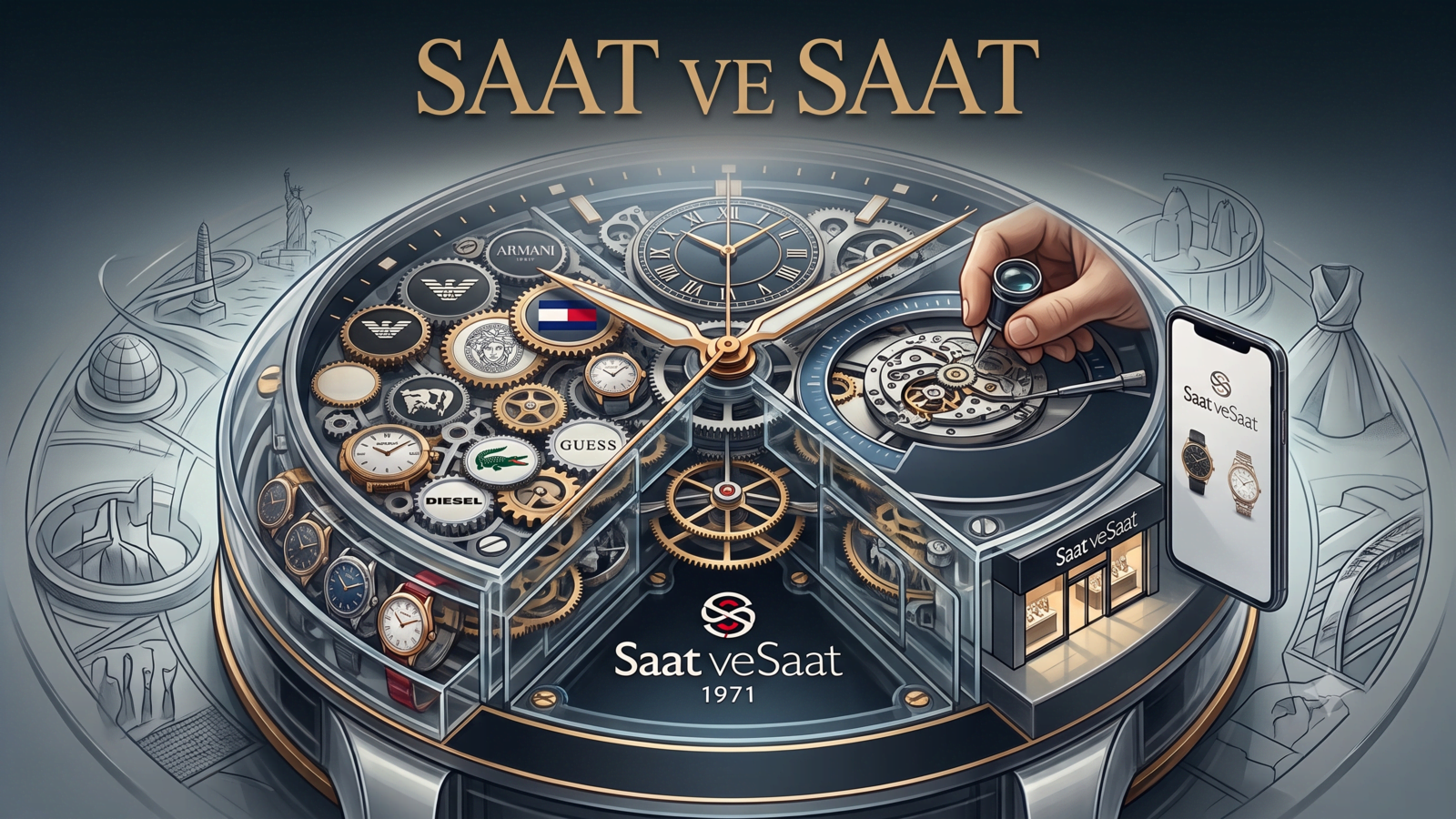
The company employs 1,150 people and drives its operations through 185 brick-and-mortar stores alongside expanding e-commerce channels. Annual sales volume has reached 1.8 million units and is growing steadily. The most critical operational aspect is that roughly 800,000 of these units consist of the company’s proprietary brands. Instead of tying up capital in its own factories, the company sends its designs to contract manufacturers in China. This asset-light model explains how they maintain strong gross profit margins ranging between 57% and 62%. While high gross margins are typical for retail-heavy models, substantial marketing and administrative expenses serve as a counterweight, normalizing operating profit.
Shifting to the income statement, revenue shows optimistic growth while the gross margin remains well-protected. This underscores that watches haven’t lost their appeal even during crises, proving highly resilient to economic volatility despite behaving like a *superior good* with positive income elasticity. Naturally, the macroeconomic climate of rising costs and interest burdens has squeezed margins slightly: gross margin dipped from 62% to 57%, operating margin compressed from 31.8% to 22.7%, and net profit margin dropped from 19.8% to 7.6% under the weight of escalating financial expenses. Having TRY 1.6 billion swallowed by financial expenses against TRY 3.5 billion in operating profit creates visible pressure, but maintaining this level of profitability in the current climate left a positive impression on me. The shareholders’ strategy to dilute their stakes by roughly 4% each to use IPO proceeds to deleverage—rather than straining cash flow with new high-interest loans—strikes me as a highly rational and sensible move.
## Overall Assessment
On balance, I don’t see any glaring operational red flags. The fact that the company preserved its sales volume and profitability while expanding equity during a downturn is highly encouraging. Brand awareness, sticky demand in the watch sector, and the management’s expansion plans look convincing for the long haul. Thanks to the contract manufacturing model, maintaining a lean cost structure while targeting diverse income brackets should support sustainable profitability.
However, things change when we look at the valuation. Although the IPO reportedly applies a 37% discount, the total corporate valuation of **TRY 37 billion** feels quite steep to me. An additional 20% to 30% discount on top of these valuation figures would have resulted in much more reasonable pricing. Even though we will see accounting improvements in cash, equity, and net profit post-IPO, the company looks expensive at these current multiples. While I buy into the operational narrative, this premium pricing demands close monitoring.
LEGAL DISCLAIMER: This content does not constitute investment advisory services. Investment advisory is a personalized service provided based on an individual’s risk-return profile, financial standing, and investment objectives. The information, commentary, and assessments provided herein are prepared solely for general informational purposes and should not be construed as investment recommendations or guidance. This content may not align with the reader’s financial position or risk-return preferences; therefore, investing based solely on this information may not yield the expected outcomes.