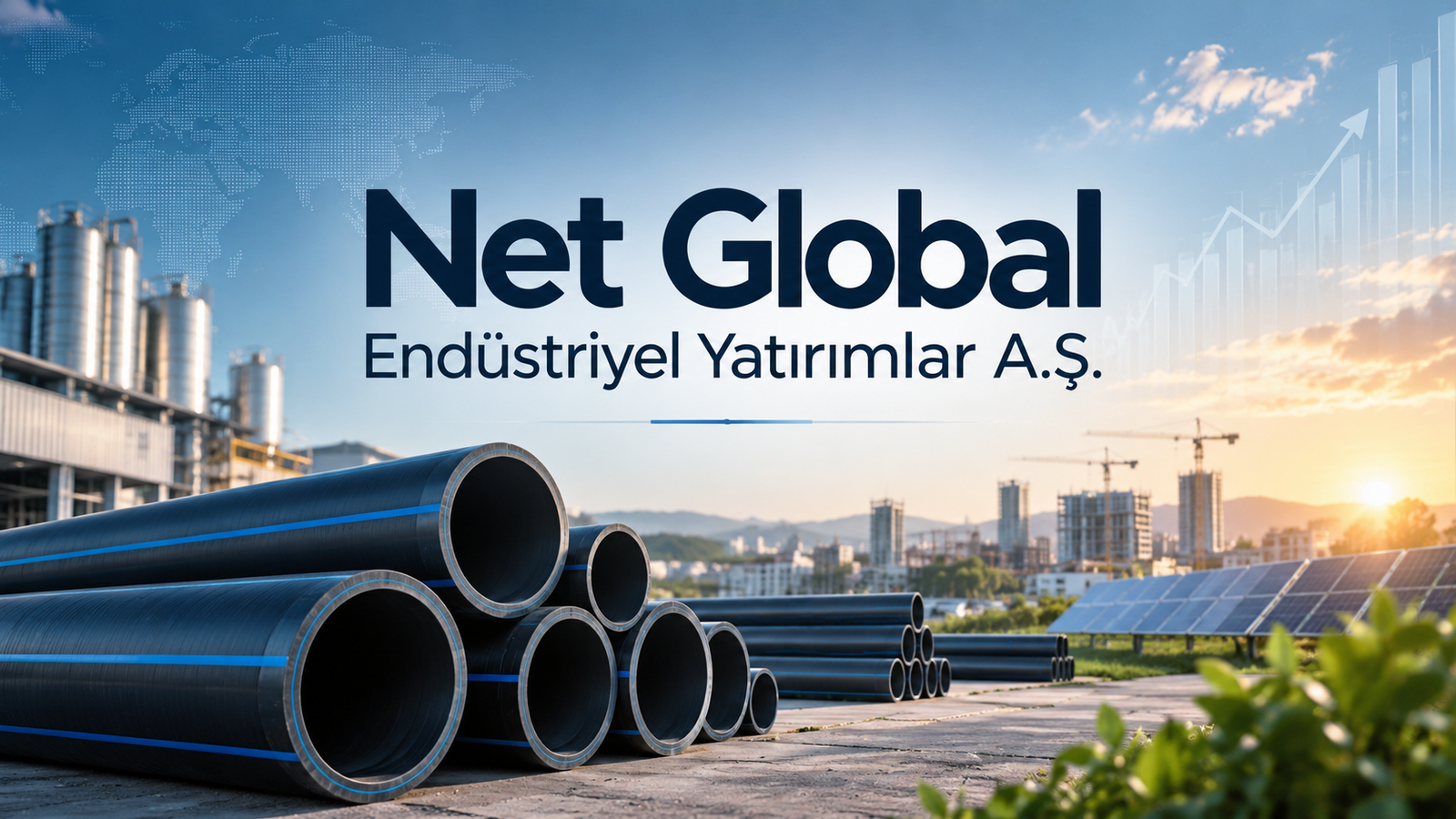
The company’s core business consists of the production of PE100 irrigation, drinking water, and utility network pipes, as well as the supply and trading of polyethylene raw materials. It also operates in several secondary business areas, including hydroponic greenhouse tomato farming, solar power generation (SPP), construction, and logistics services. However, the contribution of these activities to total revenue remains relatively limited. A review of the latest financial statements clearly shows that the vast majority of the company’s revenue is generated by pipe and raw material sales.
Revenue Breakdown and Industry Dynamics
As of June 30, 2026, the company reported total revenue of TRY 1,029,909,949, distributed across its business segments as follows:
- Pipe Sales: TRY 658,208,490
- Raw Material Sales: TRY 329,109,612
- Greenhouse Sales: TRY 19,011,734
- Logistics Revenue: TRY 14,467,410
- Solar Power (SPP) Revenue: TRY 9,112,703
These figures clearly demonstrate that the company’s core operations are pipe manufacturing and raw material trading. In recent periods, we have seen several other companies operating in similar areas enter the public markets. Given its direct exposure to construction and infrastructure investment, I believe the pipe industry is closely linked to overall economic growth, public and private sector investment, construction activity, and particularly the direction of interest rates.
An important distinction needs to be made here. The market includes a wide variety of pipe products, so it would be misleading to classify every company with “pipe” in its name under the same category. Some manufacturers produce technically demanding, higher-value-added products, while others focus on more standardized plastic-based products. For that reason, companies in this industry should be assessed not only on sales volume, but also on product quality, technological requirements, customer structure, competitive positioning, and the level of value added they create. In the case of this company, based on its current scale and customer profile, I do not see a particularly strong technological advantage or a high-value specialization that clearly differentiates it from its competitors.
Shareholding Structure and IPO Details
The company’s current ownership structure reflects a traditional family-owned business profile:
- Sami Aydın: 50% — TRY 125,000,000
- Haydar Aydın: 33% — TRY 83,335,000
- Ünal Aydın: 17% — TRY 41,665,000
Looking at the structure of the IPO, approximately 28.5% of the shares offered will come from existing shareholder sales, while the remaining 71.5% will be issued through a capital increase. Following the offering, the company’s free float is expected to be approximately 28%. Personally, I find this ratio somewhat high. In my own assessment framework, I tend to consider a free float of around 20% more reasonable and become more cautious once the figure exceeds 25%. Higher ratios may be justified for very large companies or businesses with substantial capital requirements, but in this particular case I do not find a 28% free float especially attractive.
The IPO discount has been set at 20%. On the price stabilization side, the fact that only a 15-day stabilization period is planned also stands out. I would have preferred a clearer framework regarding whether proceeds generated from the existing shareholders’ share sales will be used for price stabilization purposes. If a portion of those proceeds is allocated to support price stabilization, I would consider that a positive factor from an investor perspective. Meanwhile, the company’s greenhouse operations and, more importantly, its investment in railcar manufacturing indicate an effort to develop additional revenue streams beyond its core business.
Use of Proceeds and Investment Plan
The IPO proceeds are planned to be allocated as follows:
- 20% - 30%: Reduction of bank loans
- 25% - 30%: Strengthening of working capital
- 15% - 25%: Capacity expansion related to existing investments, including protective-pipe machinery and equipment purchases
- 20% - 30%: Completion of the railcar factory and related machinery and equipment purchases
From my perspective, the most notable aspect of the use-of-proceeds plan is that a significant portion of the funds will be directed toward improving the company’s existing financial position. When bank loan repayments and working capital support are considered together, approximately 45-60% of the IPO proceeds will effectively be used to strengthen the balance sheet and improve liquidity. Given the company’s high financing costs, this approach is understandable. From an investor’s standpoint, however, I would have preferred to see a greater proportion of the proceeds directed toward investments that contribute more directly to future growth.
The IPO is expected to bring approximately TRY 1.5-1.8 billion in fresh capital into the company. These funds are intended to reduce debt, strengthen working capital, and complete ongoing investments. The key question for investors is how much these investments will ultimately contribute to revenue and profitability once they become fully operational. In particular, the railcar factory should be assessed in terms of its annual production capacity, expected sales volume, revenue potential, target profit margins, investment payback period, and customer and order potential. Since I generally find forward-looking assumptions in valuation and price determination reports to be relatively optimistic, I prefer to assess such projections using more conservative assumptions rather than accepting them at face value.
Financial Position and Balance Sheet Analysis
Let us begin the balance sheet analysis with the company’s cash position. According to the financial statements for the six-month period ended June 30, 2026, the company holds only approximately TRY 5.5 million in cash. Considering the size of the business and its existing debt burden, this is a very low level. The majority of current assets consists of TRY 812 million in trade receivables and TRY 758 million in inventories. In my view, however, the more important issue is not simply the size of these balance sheet items, but how quickly they can be converted into cash.
Working Capital Conversion Metrics
Days Sales Outstanding: 2023: 43 days | Current: 234 days Days Payables Outstanding: 2023: 17 days | Current: 93 days Days Inventory Outstanding: 2023: 14 days | Current: 346 days
Trade Receivables and Payables
Trade Receivables: 2023: TRY 445 million | Current: TRY 812 million Trade Payables: 2023: TRY 182 million | Current: TRY 274 million
At first glance, having TRY 812 million in trade receivables against TRY 274 million in trade payables suggests a positive net receivables position. However, the increase in Days Sales Outstanding from 43 days to 234 days, together with the rise in Days Inventory Outstanding from 14 days to 346 days, is particularly concerning. These figures indicate that the company is taking significantly longer to convert its sales into cash and point to a clear deterioration in working capital management. The 346-day inventory holding period, in particular, may indicate slower sales, elevated inventory levels, or inventory remaining on the balance sheet for extended periods.
On the non-current asset side, property, plant, and equipment stands at approximately TRY 3.3-3.4 billion, largely reflecting factory buildings and production facilities. This part of the balance sheet presents a more stable picture. In my view, the more critical areas to monitor are the quality of current assets and the speed at which the company can normalize its working capital cycle.
Debt Structure
The maturity profile of the company’s financial debt is as follows:
- Short-Term Debt: TRY 475 million
- Current Portion of Long-Term Debt: TRY 489 million
- Total Financial Debt Due Within One Year: TRY 964 million
- Long-Term Debt: TRY 55 million
The main issue here is not simply the total amount of debt, but rather its maturity structure. Approximately TRY 964 million of financial debt falls due within one year, while long-term debt stands at only TRY 55 million. When this is considered alongside the company’s low cash balance, longer collection periods, and slower inventory turnover, it becomes clear that the concentration of debt in the short term is creating significant liquidity pressure. Using part of the IPO proceeds to reduce financial debt could therefore provide meaningful balance sheet relief and ease the company’s near-term financing burden.
Income Statement and Profitability Analysis
Looking at the company’s revenue performance, there has been a clear decline from previous peak levels.
Revenue Trend
2023: TRY 3.242 billion | 2024: Approximately TRY 2 billion | 2025: Approximately TRY 2 billion
After reaching TRY 3.242 billion in revenue in 2023, the company’s top line declined to approximately TRY 2 billion in the following period and remained around that level in 2025. Results from the first six months of 2026, however, provide somewhat more encouraging signals compared with 2025. Despite cost pressures, the company has been able to preserve its gross profitability to a certain extent, while controlled administrative expenses have also supported operating profitability.
The most significant weakness on the income statement, however, is financing expenses. Although the company is capable of generating operating profit, a substantial portion of that profit is absorbed by interest and other financing costs. Reducing financial debt could therefore have a meaningful positive impact on net profitability. Regarding net monetary position gains and losses, the company recorded a positive impact of approximately TRY 25 million in the first half of 2026, compared with a negative impact of around TRY 27 million in the same period of the previous year. Given the overall scale of the company, I do not consider this item significant enough on its own to materially change the investment thesis.
What Are the Company’s Main Challenges?
Looking at the financial statements as a whole, I would group the company’s main challenges under three headings:
1. Revenue remaining below previous peak levels: The company’s revenue remains materially below the level recorded in 2023.
2. Deterioration in working capital management: The substantial increase in collection periods and inventory holding periods is putting pressure on the company’s ability to generate cash.
3. Financial debt concentrated in the short term: The combination of a high debt burden and elevated financing costs makes it difficult for operating profitability to translate into net profit.
These three issues are closely interconnected. Slower sales contribute to higher inventories, while longer collection periods increase the company’s need for cash and consequently its dependence on external financing. In a high-interest-rate environment, that additional financing requirement places further pressure on profitability. The potential importance of the IPO therefore extends beyond simply reducing debt; it could also provide the company with an opportunity to break this negative cycle.
Overall Assessment
I view the company’s current financial position largely as the result of an intensive investment period coinciding with a sharp change in macroeconomic conditions. Interest rates increased rapidly while the company was investing, and revenue weakened during the same period, placing significant pressure on the balance sheet. Against this backdrop, management’s decision to raise fresh capital through an IPO, reduce debt, and complete ongoing investments appears reasonable in principle.
Following the IPO, the key areas to monitor will be the extent to which short-term debt is reduced, how significantly financing expenses decline, whether collection periods begin to normalize, how quickly inventory can be reduced, and how much the new investments contribute to both revenue and profitability. Meaningful improvement across these areas could result in a financial profile that looks considerably stronger than the company’s current position.
Valuation View
However, the potential for a financial recovery does not automatically make the shares attractive at the current valuation. In my view, the quality of a company and the price of its shares are two separate issues and should be evaluated independently. I consider the IPO market capitalization of approximately TRY 8 billion to be high relative to the company’s current financial profile.
When the company’s declining revenue, extended receivables collection periods, exceptionally long inventory holding period, short-term debt concentration, high financing costs, and limited product differentiation are assessed together, I believe the current valuation already incorporates a considerable degree of future improvement. Based on the information currently available, I also do not see a particularly high technological barrier to entry or a strong value-added competitive advantage in the company’s core business that clearly distinguishes it from its peers.
Based on my own assessment, the IPO valuation is approximately 35-40% above the level I currently consider fair value for the company. For this reason, I do not see a particularly compelling investment opportunity at the current pricing. That said, the company may become worth reassessing if interest rates decline, the IPO proceeds are successfully used to reduce debt, financing costs fall, working capital indicators normalize, the railcar factory becomes operational, and the company’s new investments begin contributing meaningfully to revenue and profitability.
For me, one of the most important indicators will be how much free cash flow and net profit the company can generate once its debt burden has been reduced. Ultimately, the IPO has the potential to provide substantial financial relief for the company. From an investor’s perspective, however, the key question is not simply whether the company can recover, but how much of that expected recovery is already reflected in the current valuation. At present, I do not find the risk-reward balance sufficiently attractive and would prefer to wait for a more reasonable valuation level.
LEGAL DISCLAIMER: This content does not constitute investment advisory services. Investment advisory is a personalized service provided based on an individual’s risk-return profile, financial standing, and investment objectives. The information, commentary, and assessments provided herein are prepared solely for general informational purposes and should not be construed as investment recommendations or guidance. This content may not align with the reader’s financial position or risk-return preferences; therefore, investing based solely on this information may not yield the expected outcomes.