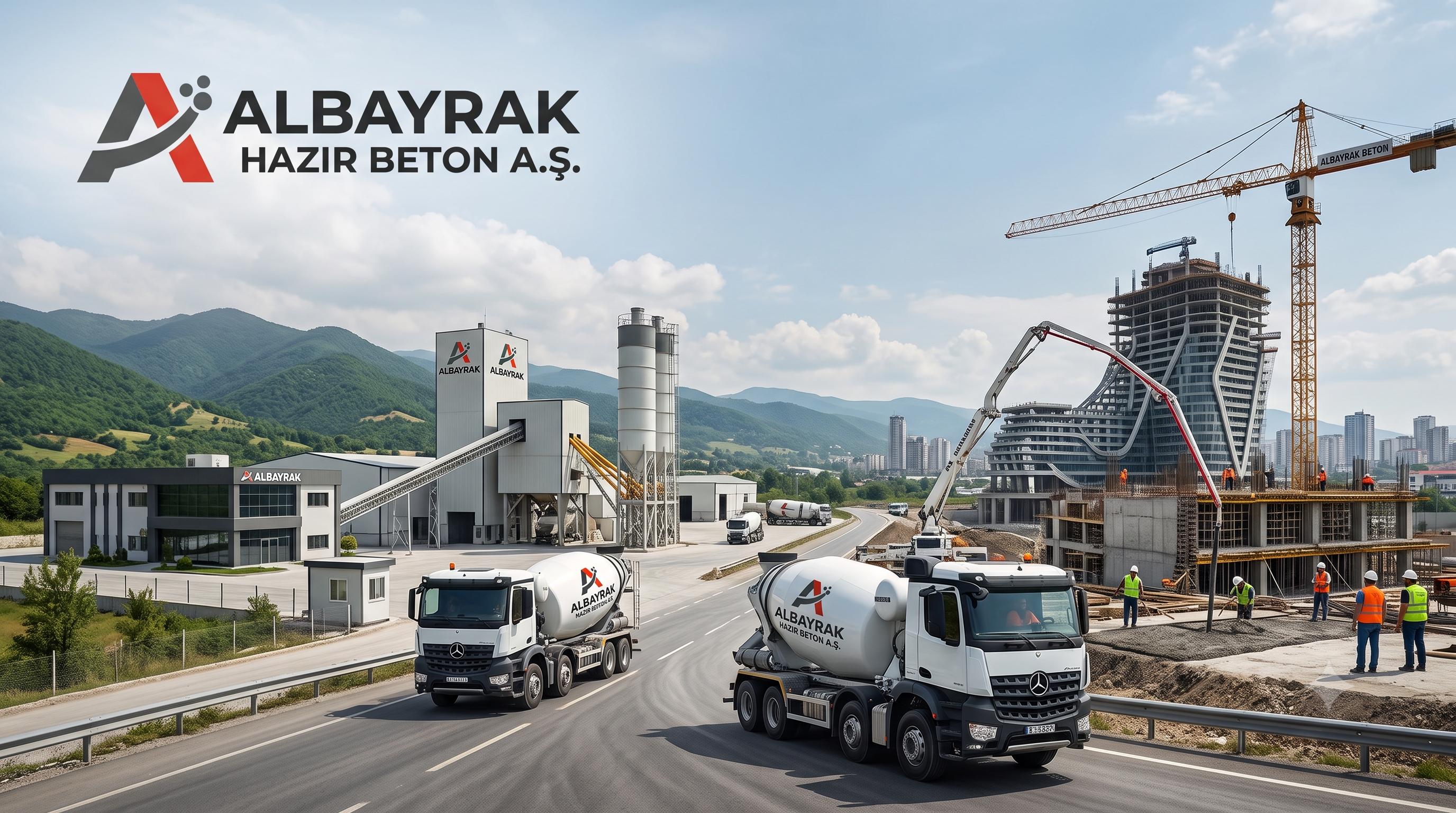
In this post, rather than rehashing basic IPO details that anyone can easily access, I want to take an investor’s perspective to analyze Albayrak Hazır Beton’s operational structure, the location risk of its Göztepe plant, the planned use of IPO proceeds, its debt profile, and its recent financial indicators.
As the name suggests, the company produces ready-mixed concrete and generates almost all of its revenue from this single business line. In the ready-mixed concrete sector, plant location is critical. The concrete must reach the job site within a specific timeframe; much like delivering hot food before it cools down, depending on the mix type, the concrete needs to be poured via mixer trucks within two hours at most. When evaluating companies with production facilities in Istanbul, I pay close attention to their footprint in high seismic risk zones. From this standpoint, the company’s Göztepe plant sits in a vulnerable area, yet accounts for roughly a quarter of its revenue. Even though Istanbul’s concrete demand will inevitably be met one way or another, this setup carries notable operational risk. While the company has insured its facilities against earthquakes, my valuation framework centers on cash flow and profitability. In the event of a disaster, I believe insurance payouts for halted production would fall short of covering long-term losses. Since a **predictable and sustainable revenue structure** is my top priority, this risk factor cannot be ignored.
IPO Structure and Shareholder Sale
Looking at the IPO structure, **70% of the proceeds come from a capital increase**, while **30% stems from a shareholder sale**. There is no commitment that the funds raised through the shareholder sale will be injected back into the company. The free float rate is set at **28%**, with an IPO discount of **25%**. Keeping the free float at this level raises two fundamental questions for me: Did a strong growth outlook for coming periods drive this ratio, or was it the urgent need to cover high debt levels?
Company shares are divided equally among Erdal Albayrak (24%), Şeref Albayrak (24%), and Osman Albayrak (24%). This equal split was maintained during the shareholder sale. Following the IPO, net proceeds of **TRY 1.76 billion** are expected to enter company coffers, bringing the total market capitalization to **TRY 9.65 billion**.
Use of Proceeds and Cash Needs
The allocation plan for the funds raised from the IPO is detailed as follows:
* 60% — Financing new investments and construction projects
* 20% — Working capital
* 10% — Vehicle, machinery, and equipment purchases
* 10% — Reduction of financial debt
Directing a major portion—around 70%—toward investments highlights a growth mindset. Looking closer at the details, the goal is to finance new facilities and subsidiary acquisitions in Istanbul, as well as ongoing projects aimed at expanding into real estate. For a company that accounts for roughly **0.46%** of Turkey’s total ready-mixed concrete production, these steps could help expand its scale. Still, given its current debt and cash position, allocating a larger share of the IPO proceeds to debt reduction might have offered a healthier path toward financial relief.
Operational Structure, Capacity, and the Growth Side
Looking at the company’s balance sheet, current assets are heavily dominated by inventories and trade receivables. Cash on hand stands at a remarkably low level relative to the company’s scale (**TRY 89 million**) and has been trending downward over the years. While trade receivables have remained relatively stable, the notable rise in inventory immediately stands out.
While the industry average capacity utilization rate floats around 78%, the company’s rate lingering in the **35–40% range** poses a significant question mark. In sectors like ready-mixed concrete where large vehicle fleets are managed, high capacity utilization turns fleet assets into a key operational advantage. Conversely, when capacity remains low, maintaining those same assets places a severe cost and cash strain on the business.
Debt, Receivables, and Cash Conversion Cycle
On the cash cycle front, the balance between trade receivables and payables presents a positive outlook at **+261**. Days sales outstanding (DSO) came in at 28 days, while days payable outstanding (DPO) stood at 31 days. This indicates that as long as sales continue, operational cash flow can be managed effectively. However, a days inventory outstanding (DIO) figure as high as **184 days** signals that inventory turnover has slowed significantly, driving up holding costs.
Examining the debt structure, the company faces short-term obligations—including trade payables—of approximately **TRY 2 billion** due within the next year. On the flip side, total liquid resources (including inventory and cash) hover around **TRY 1.7 billion**. Much like in the case of Şa-ra Enerji, long-term debt is virtually non-existent. Consequently, if the company can navigate this year’s short-term debt pressures, a financial turnaround could be on the horizon. Currently, tight monetary policy is curbing demand and amplifying debt burdens, triggering similar bottlenecks across many newly listed companies.
Income Statement and Margins
Looking at the income statement, revenue shows a downward trend over the years. Although the company managed to keep finance costs contained to a degree, it hasn’t completely relieved the squeeze on net profit. The core issue remains price pressure caused by declining revenue and shrinking demand, which directly weighs on margins. Latest Q1 2026 financial data shows that this trend is continuing.
The shift in margins is as follows:
* Gross profit margin: Dropped from around 21% to 5.69%
* Operating profit margin: Dropped from 25.51% to 1.04%
* Net profit margin: Dropped from 18.34% to 0.74%
Overall Assessment
Albayrak Hazır Beton operates a business model that is straightforward to understand but highly sensitive to macroeconomic conditions. High inventory turnover days, low capacity utilization, and narrowing profit margins currently point to operational pressure. That said, low long-term debt and the fresh cash injection from the IPO could help manage short-term obligations. If monetary policy relaxes and demand recovers, profitability levels could move back toward historical norms. However, based on the current picture, I can’t say it presents a particularly compelling value proposition for me.
LEGAL DISCLAIMER: This content does not constitute investment advisory services. Investment advisory is a personalized service provided based on an individual’s risk-return profile, financial standing, and investment objectives. The information, commentary, and assessments provided herein are prepared solely for general informational purposes and should not be construed as investment recommendations or guidance. This content may not align with the reader’s financial position or risk-return preferences; therefore, investing based solely on this information may not yield the expected outcomes.